Unismuh Makassar Earns Global Recognition: Included in QS Asia University Rankings 2026
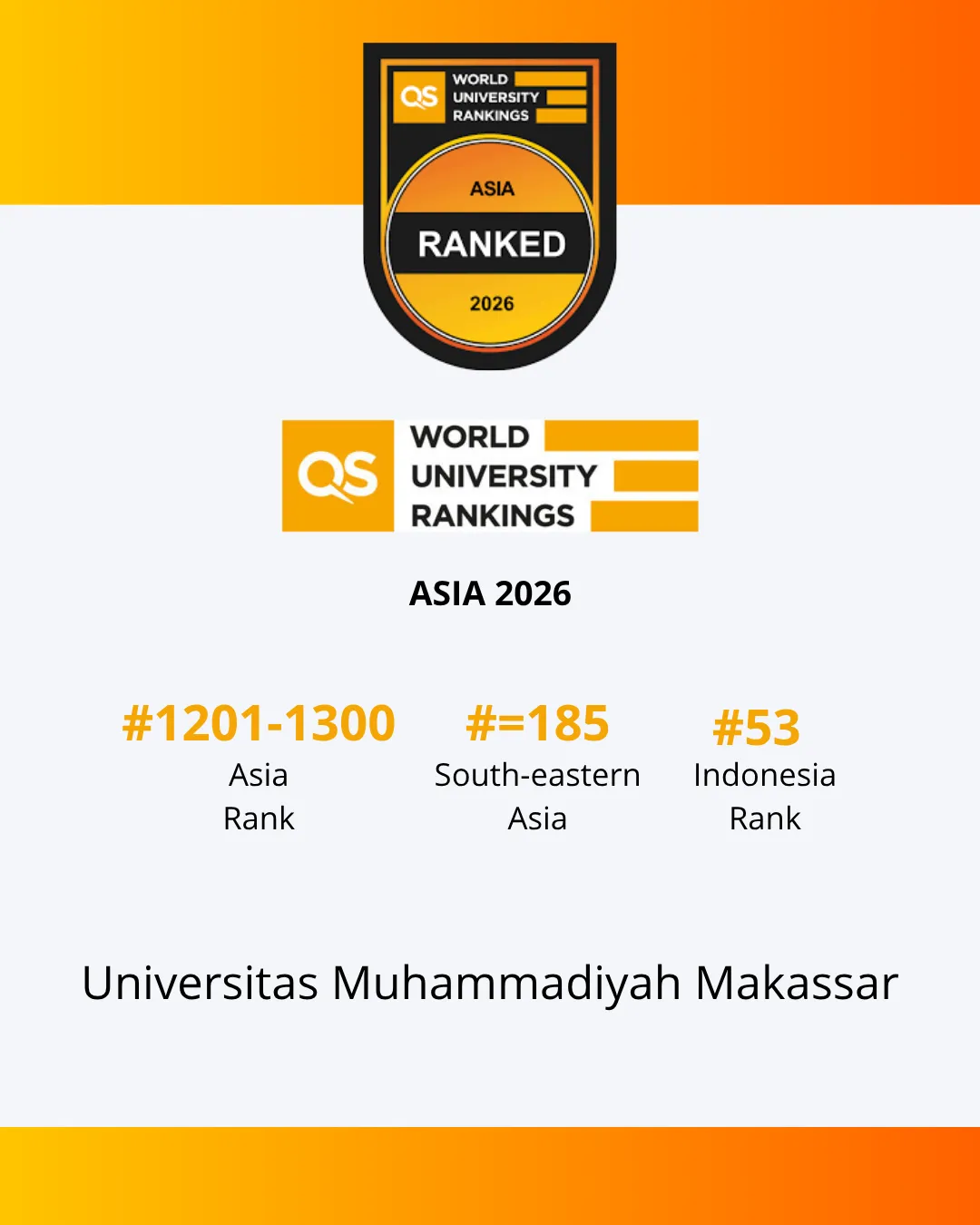
Alhamdulillah, Universitas Muhammadiyah Makassar (Unismuh Makassar) has once again achieved a prestigious accomplishment on the international stage by being included in the QS Asia University Rankings (QS AUR) 2026, which was officially announced by Quacquarelli Symonds (QS) on November 4, 2025, at 11:00 BST, via the topuniversities.com website.
This achievement marks a significant milestone in Unismuh Makassar's journey towards becoming a globally competitive university. According to the official QS Fact File 2026 data, Unismuh Makassar is ranked 1201–1300 in Asia, and is one of the 93 Indonesian universities that have successfully achieved this prestigious ranking. This achievement reflects the international recognition of the university's commitment to improving academic quality, research, governance, and the global competitiveness of its graduates.
An Achievement Reflecting Academic Performance and Global Collaboration
The Rector of Universitas Muhammadiyah Makassar, Dr. Ir. Abd Rakhim Nanda, ST., MT., IPU., expressed his gratitude and appreciation to all members of the academic community for their hard work, commitment, and synergy in the internationalization efforts of the university.
"Alhamdulillah, this achievement is a tangible result of the collective efforts of all university components to improve the quality of the university's four main duties. Unismuh's participation in the QS Asia University Rankings is proof that we have been on the right path towards a world-class university based on Islamic Muhammadiyah values," he said.
He emphasized that this ranking is a global recognition of Unismuh Makassar's performance during the 2023/2024 academic year, and the results will be used as a basis for QS's publication for the 2026 period.
"In the future, this achievement will be a new source of energy for Unismuh to strengthen its quality, collaborative research, and academic internationalization," he added.
Analysis of Key QS Asia Rankings Indicators
Based on the QS evaluation results, the "Inbound Exchange Students" indicator recorded the highest score of 30.9, indicating that Unismuh Makassar has successfully attracted foreign students to participate in exchange programs (exchange program). The second indicator with a high score is "International Faculty Ratio" with a value of 22.5, which measures the proportion of international faculty involved in academic activities in the university. The presence of foreign teachers strengthens the global learning environment and expands Unismuh's international collaborative research network.
Meanwhile, "Faculty–Student Ratio" obtained a score of 19.5, indicating an ideal student-to-faculty ratio. This reflects the university's commitment to providing high-quality education with adequate attention to each student through intensive academic interaction.
Despite its strengths in academic mobility, Unismuh Makassar still faces challenges in some research and reputation indicators. The "Citations per Paper," "Employer Reputation," and "Papers per Faculty" indicators each have relatively low scores of 2.4, 2.2, and 2.2, respectively.
"Citations per Paper indicates the average number of citations received by each of Unismuh's academic publications, indicating the need to increase international research impact. "Employer Reputation serves as an important reminder for the university to strengthen the relevance of its curriculum, professional skills, and industry networks.
In addition, "Papers per Faculty, which reflects the productivity of faculty research, emphasizes the need to increase the number of indexed Scopus publications in the last five years.
The QS Asia University Rankings uses research data sourced from Scopus (Elsevier) with a five-year publication and six-year citation analysis period.
The data used for Unismuh Makassar in the QS Fact File 2026 is as follows:
- Papers – Affiliation Cap Applied (2019–2023 Period): QS calculated the number of indexed Scopus publications in the 2019–2023 period. This data has undergone an affiliation cap applied process, which is verification and filtering to only count publications that include the official affiliation of Universitas Muhammadiyah Makassar.
- Citations (Excluding Self-Citations) – Affiliation Cap Applied (2019–2024 Period): To calculate the scientific impact, QS used citation data during 2019–2024 without including self-citations (self-citations). This approach provides more objective results because only the influence of Unismuh's research on other researchers outside the institution is calculated.
Ranking as a Tool for Continuous Quality Assessment and Improvement
The Head of the Unismuh Global Excellence Center (UGEC), Prof. Hartono Bancong, Ph.D., explained that this achievement is not only seen as an institutional achievement, but also as a Evaluation and Internal Improvement Tool — a strategic tool for measuring and continuously improving university quality.
"QS Rankings provide a very clear reflection of our strengths and areas for improvement. The focus is on improving the quality and impact of research, increasing international publication collaboration, and strengthening the reputation of graduates in the eyes of employers," he said.
Furthermore, he emphasized that future rankings depend on the collective performance of the academic community, from increasing publications and citations in Scopus, strengthening international collaborative research, increasing the number of foreign students, and expanding global partnership networks that have a direct impact on international recognition.
About QS Asia University Rankings
QS Asia University Rankings is the most influential university ranking system in the world, compiled by the independent organization Quacquarelli Symonds (QS).
This ranking assesses more than 1,500 universities in Asia, including 93 Indonesian universities, using a number of key indicators, namely:
- Academic Reputation (30%)
- Employer Reputation (20%)
- Faculty–Student Ratio (10%)
- Staff with PhD (5%)
- Citations per Paper (10%)
- Papers per Faculty (5%)
- International Research Network (10%)
- Inbound and Outbound Exchange Students (each 2.5%)
- International Faculty Ratio and International Students Ratio (each 2.5%)
Through these indicators, QS provides a comprehensive overview of the quality of research, academic reputation, and global relevance of a university.
With this result, Unismuh Makassar has further strengthened its commitment to becoming a World Class University that not only excels academically but also actively contributes to building a global civilization based on Islamic and humanistic values.
Sustainable Development Goals


Related News
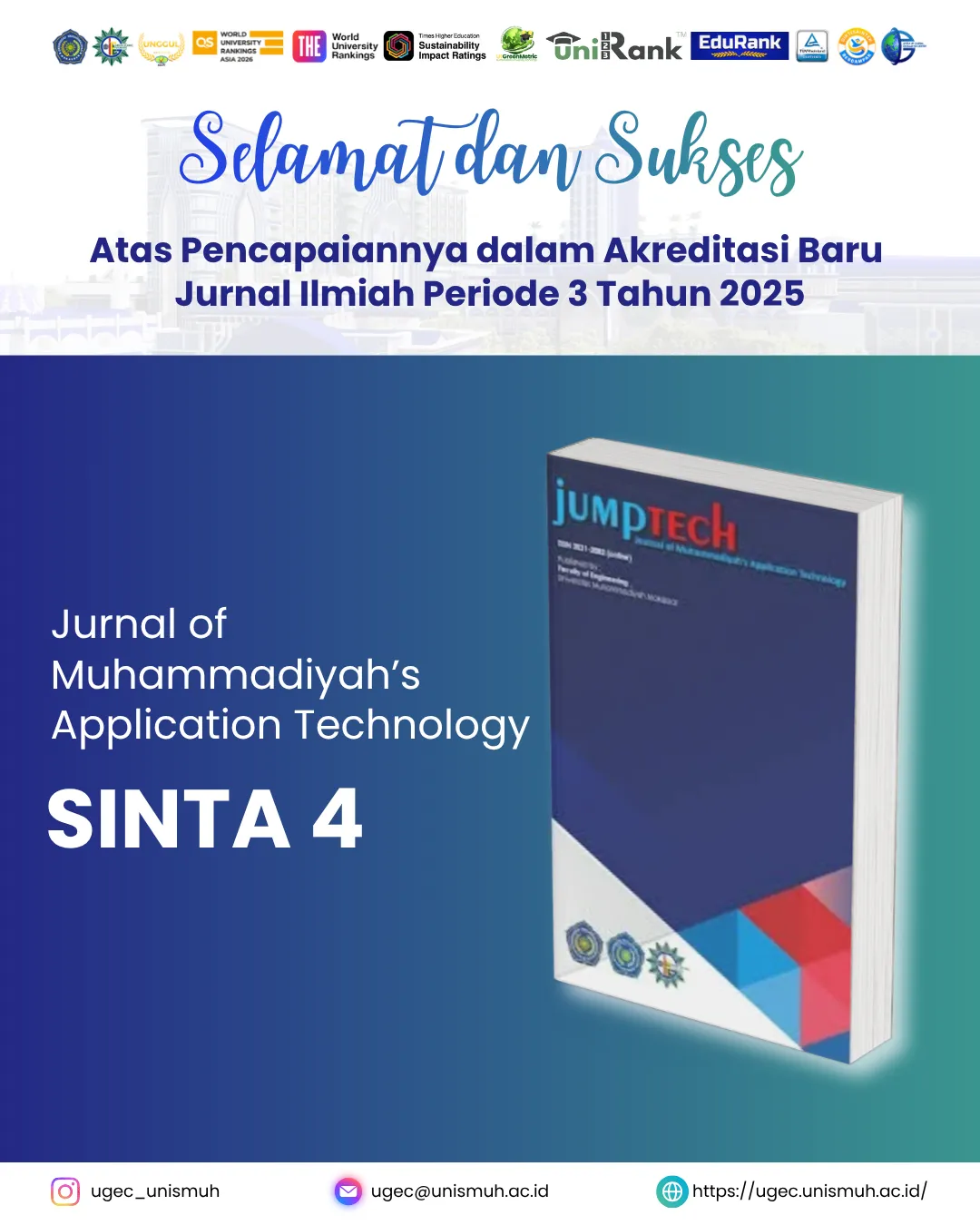
JUMPTECH Unismuh Makassar Raih Akreditasi Perdana SINTA 4
29 Jul 2026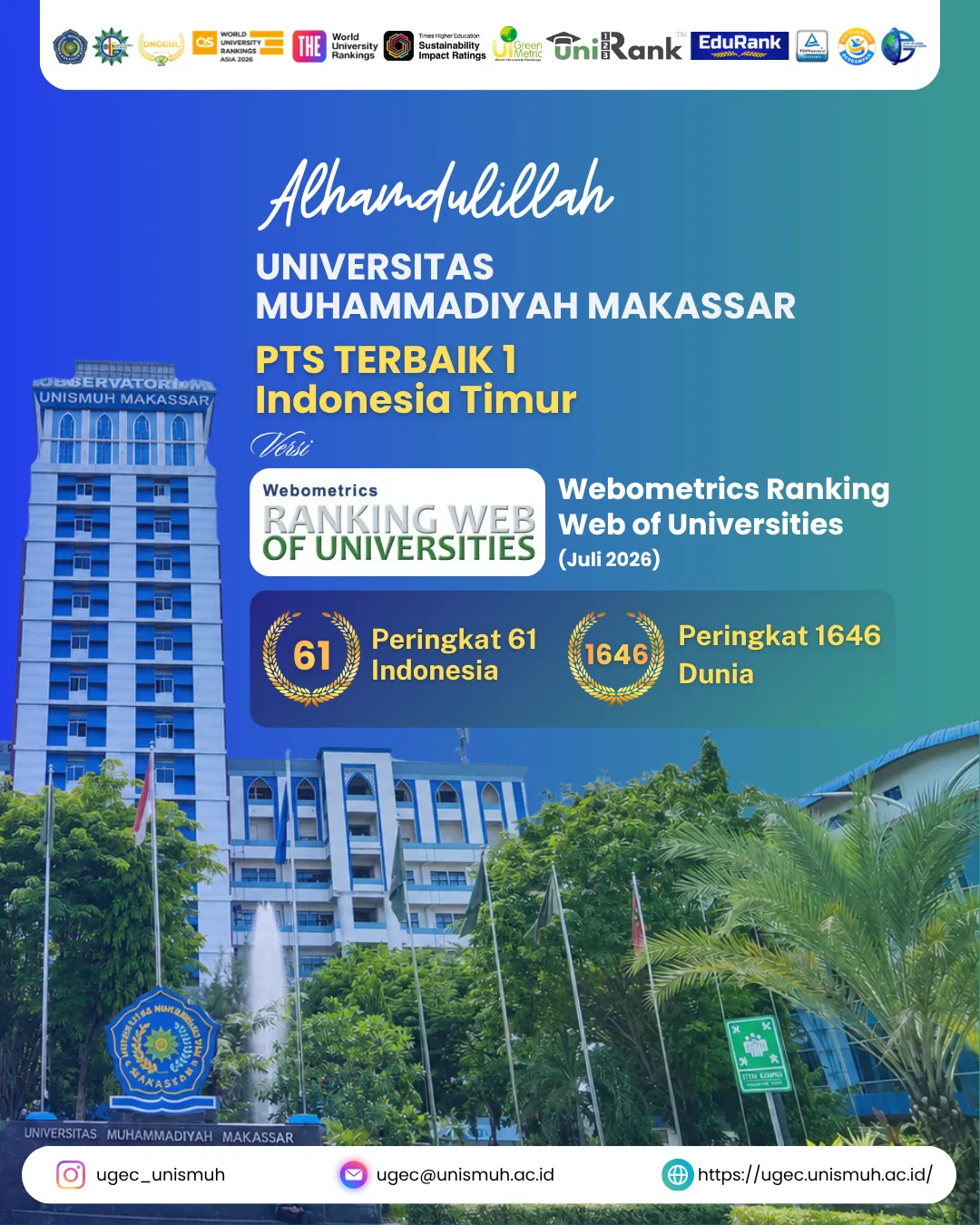
Webometrics Juli 2026: Unismuh Makassar Jadi PTS Terbaik di Indonesia Timur, Tempati Peringkat 61 Nasional, dan Peringkat 1646 Dunia
28 Jul 2026
Menguatkan Langkah Menuju Kampus Berkelas Dunia, Unismuh Makassar Tuntaskan Submission UI GreenMetric Rankings 2026
15 Jul 2026